
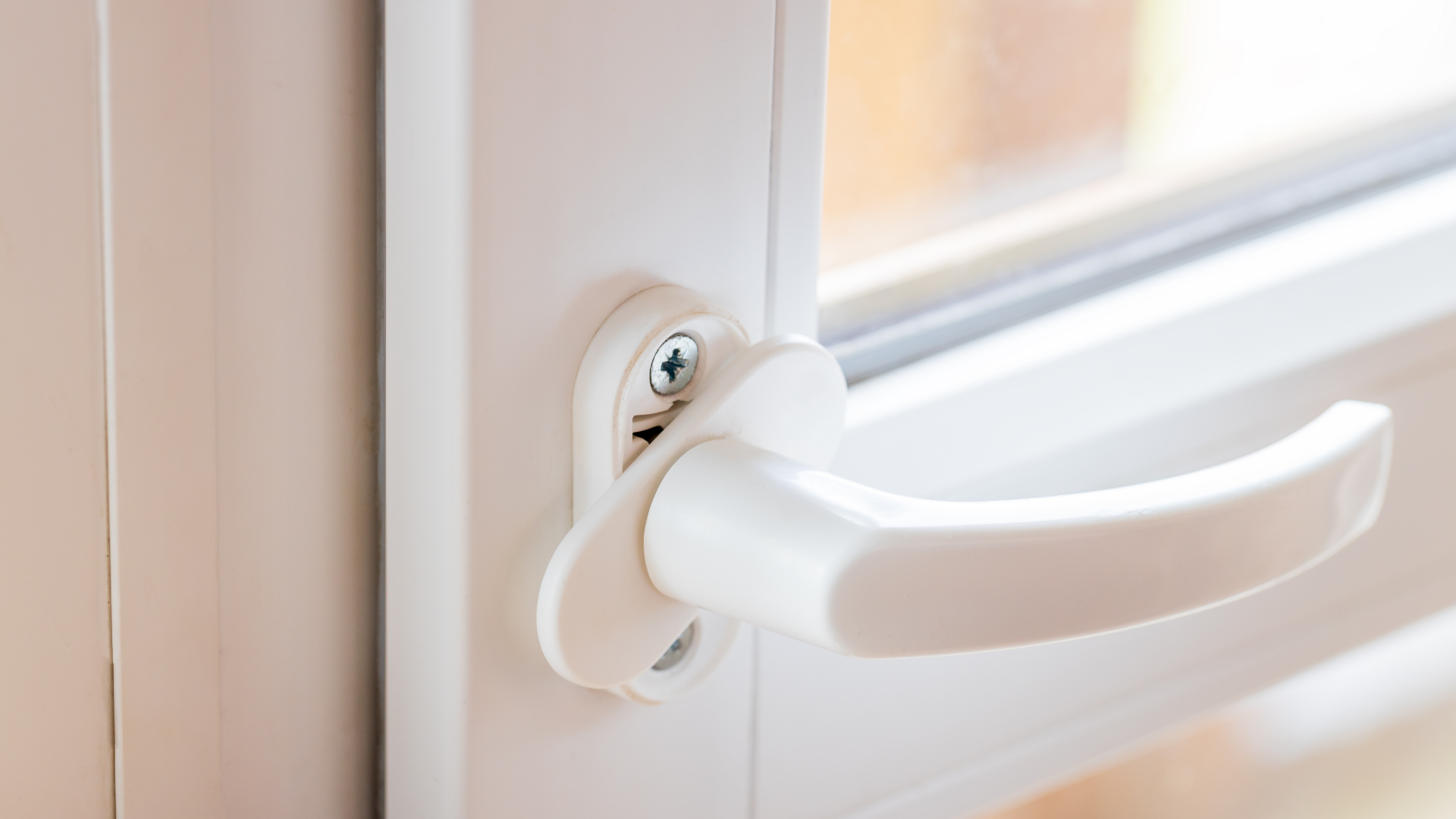
uPVC door & window locks
uPVC Door Lock RepairIn London — Fixed Properly,Without Replacing The Door.
A handle that spins, a door that has to be lifted, a mechanism that will not throw: all of it is repairable in most cases for a fraction of a new door. We correct the alignment that caused the failure and fit a matching mechanism, warranted for three years.
25 years in London · Typical 30-minute response · 3-year warranty
25 years
Serving London
30 mins
Typical response
24/7 · 365
Always available
3 years
Warranty on work & locks
From £48
Priced before we travel
Overview
How uPVC door locks work and what goes wrong
A uPVC or composite door does not have one lock. It has a multipoint mechanism: a gearbox in the centre of the door edge driving hooks, rollers, mushrooms or deadbolts along a full-length strip, operated by lifting the handle and turning a euro cylinder. The same principle scales down to espagnolette locks in uPVC windows.
Almost every failure comes from one of four places — the euro cylinder, the gearbox, the handle set and spindle, or the door's alignment in the frame. Diagnosing which is not guesswork: the way a door behaves when you lift the handle, and where the hooks sit against the keeps, tells you where the load is going.
This is worth having done properly because uPVC doors are commonly written off when they should not be. Replacement doors run into hundreds or thousands of pounds. A mechanism replaced by someone who knows the gearbox and corrects the hinge and keep positions first restores the door to how it worked when it was new, and stops it eating another mechanism in a year.
Who this is for
- Homes and flats with uPVC or composite front, back and patio doors
- Anyone whose handle has gone floppy or whose door will not lock without a fight
- Landlords and agents facing repeated tenant reports on the same door
- Shops and offices with uPVC entrance doors under heavy daily use
Answered 24/7 · From £48
Leave it and it gets worse
Why a struggling uPVC door gets expensive fast
Every lift-and-shove to get the door locked is force being transmitted straight into the gearbox. Gearboxes are made of cast components with fine tolerances; they are designed to move an aligned mechanism, not to drag a dropped door up into position. Once they crack, the handle goes slack and the hooks stop deploying entirely.
The failure mode matters. Multipoints usually fail in the locked position — with you outside, or with the door secured and unopenable. Both scenarios turn into an emergency call-out, and getting into a door with a seized mechanism is a longer and more expensive job than the repair would have been the week before.
Meanwhile the security gap is real. A door held only by the latch, because nobody wants to fight the deadlocking, offers a fraction of the resistance of a properly thrown multipoint. Insurers look closely at that after a forced entry, and the sum involved is far more than a gearbox and an hour's labour.
Common mistakes
- Continuing to slam or lift the door for months instead of adjusting the hinges early
- Fitting a cheap generic gearbox that does not match the strip's handle and cylinder centres
- Replacing the cylinder when the actual fault is the mechanism or the alignment
- Ignoring a stiff patio or back door because the front door still works
- Being told the whole door needs replacing when only the mechanism has failed
Our process
Five steps, priced before we start
01
Inspect the door in and out of the frame
We check gaps down the closing edge, hinge condition, compression of the weather seal, keep positions and how the hooks are landing. That shows whether the mechanism failed on its own or was pushed.
02
Diagnose the specific component
Cylinder, gearbox, full multipoint strip, handle set or spindle — each has distinct symptoms. You get told which one, what it costs, and whether repair or replacement is the sensible route.
03
Correct alignment, then fit the parts
Hinges and keeps are adjusted so the door sits square first. Only then does the new gearbox or multipoint go in, measured to the correct backset, handle centres and cylinder centres for your door.
04
Full operation testing
Locked and unlocked from both sides with the door closed, checking every hook and roller engages and that the handle lifts without effort. If it still needs lifting, the job is not finished.
05
Sign-off, warranty and keys handed over
You get every key that works the lock, a clear price with no surprise additions, and our 3-year warranty on the work and the locks we fitted. All payment types are accepted at the door.
What you get
Concrete outcomes, not adjectives
Keeps the door you already own
Mechanism repair or replacement typically costs a small fraction of a new uPVC or composite door and glazing unit.
Fixes the cause of the failure
Alignment is corrected first, so the new gearbox is not asked to do the job that destroyed the last one.
Restores full multipoint security
Every hook and roller engaging again puts the door back to the resistance level the manufacturer designed it for.
Effortless daily use
No lifting, no leaning, no slamming — which means the door actually gets deadlocked every time it is closed.
Emergency cover if it fails shut
24/7, 365 days a year with a typical 30-minute response if a mechanism seizes with you on the wrong side of it.
Three-year warranty
Both the labour and the mechanism we fit are covered for 3 years.
In detail
Mechanisms, brands, materials and window locks
Gearboxes, strips and matching the hardware
Multipoint strips vary by manufacturer, backset, faceplate width, handle centre distance and cylinder centre distance. A gearbox that is nearly right is wrong: it will bind, wear the follower and fail early. Correct identification of the strip — often from stampings on the faceplate — is what makes a repair last.
Where the original strip is obsolete, options are a compatible modern gearbox fitted into the existing strip, or a full replacement multipoint of matching dimensions. Both are routine work; what matters is that the hook and roller positions still align with the existing keeps, or that the keeps are moved to suit.
Hinges, packing and why doors drop
uPVC doors are heavy and hang from adjustable hinges — flag, butt or rebate types depending on the system. Over years of use the door settles, and heat makes the slab move seasonally, so a door that locks perfectly in February can bind in July.
Most hinges adjust in two or three planes with a hex key, which corrects lateral position, height and compression against the seal. Where glazing has slipped inside the frame, re-toeing and heeling the glass packers squares the slab itself. These adjustments are cheap, quick and are the reason a door stops needing to be lifted.
Euro cylinders, handles and anti-snap upgrades
While the door is apart, the cylinder is worth reviewing. Many uPVC doors across London still carry the builder-grade cylinder they were fitted with, with no anti-snap sacrificial section, sometimes protruding several millimetres past the handle plate — the exact condition snapping attacks look for.
Handle sets matter too. A cheap handle with a worn spindle transmits movement badly and can crack a gearbox on its own. Fitting a security handle with hardened plate and the correct spindle length protects the mechanism as well as the door.
Window locks and residential versus commercial doors
uPVC windows use espagnolette mechanisms with mushroom cams, plus friction stays that carry the sash weight. Symptoms are similar in miniature: a handle that will not turn, a sash that has to be pulled in hard, or a window that no longer locks. Espags, cams, stays and handles are replaceable individually.
Commercial uPVC doors take far more cycles than domestic ones and often carry closers, which add constant load. In shops and offices we specify heavier-duty mechanisms and check the closer alongside the lock; for managed residential blocks and let properties we handle the same work as planned maintenance for the letting agents and property maintenance companies we are contracted to.
Questions
uPVC door & window locks in London — your questions answered
How much does uPVC door lock repair cost in London?
From £48, with parts such as a gearbox or full multipoint quoted clearly after diagnosis and before work starts. All payment types are accepted.
My handle just spins and nothing locks. Can that be fixed?
Almost always. A spinning handle usually means a broken gearbox or a failed spindle. Both are replaceable in the existing door — you very rarely need a new door.
How long does a multipoint replacement take?
Typically one to two hours including alignment. Many are completed on the first visit because common mechanisms are carried on the van.
Why does my door need lifting before the key will turn?
The door has dropped or moved in the frame, so the hooks are not meeting the keeps cleanly. Adjusting hinges and keeps fixes it, and doing it early is what saves the gearbox.
Can you repair the door if the mechanism has locked shut with me outside?
Yes. We attend 24/7 with a typical 30-minute response, gain entry and then repair or replace the mechanism on the same visit wherever the parts allow.
How long will a new mechanism last?
On a properly aligned door, many years of normal use. On a door left out of alignment, months. That is why alignment correction is part of the job rather than an optional extra, and why we warrant the work for 3 years.
Do you fit anti-snap cylinders to uPVC doors?
Yes, and it is the single most worthwhile upgrade on a uPVC door. We measure the cylinder so it sits flush rather than protruding, then fit an anti-snap unit.
Do you repair uPVC window locks too?
Yes — espagnolette mechanisms, cams, friction stays and handles on uPVC windows are all repairable or replaceable, usually on the same visit as door work.
Do you cover my part of London?
We work across London from E16, including Bow, Canary Wharf, Islington, Chelsea, Battersea, Brixton, Tooting, Croydon and Notting Hill.
Related services
Areas we cover
Based in E16 4RF, London, covering London. Back to the homepage or request an estimate.
Get the door working like it did when it was new
Diagnosis of the mechanism and the alignment together, matching parts fitted, and a door that locks with one hand. From £48, across London, warranted for three years.
- City & Guilds qualified
- DBS-checked locksmiths
- 3-year warranty