
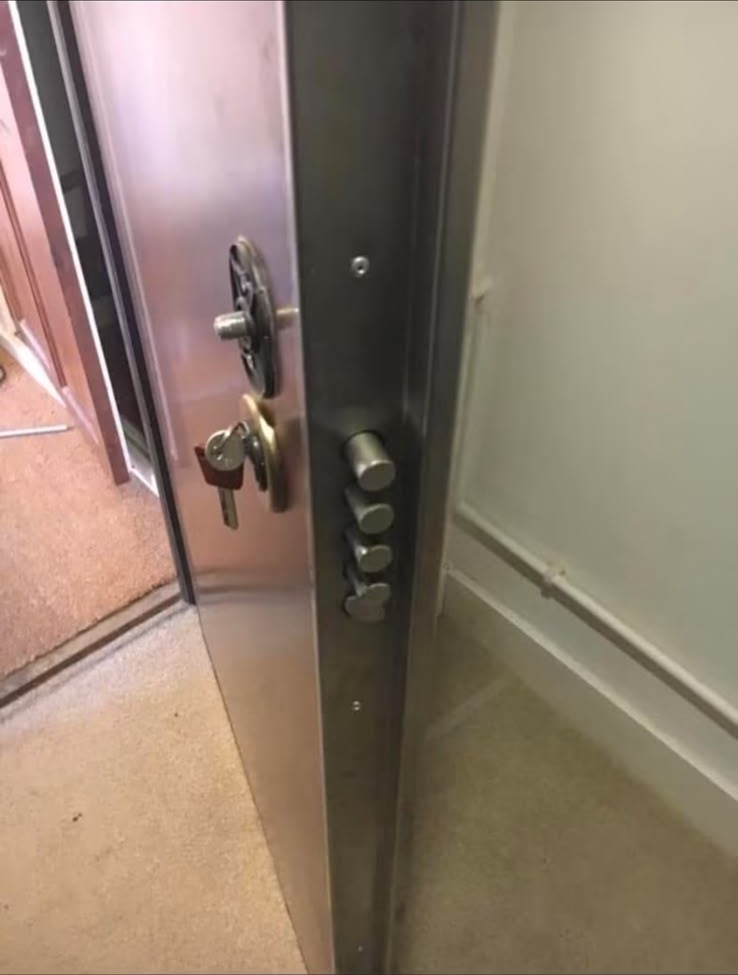
Security upgrades
Security Upgrades In LondonThat Target How DoorsAre Actually Attacked.
Not more locks — the right ones, in the right places. We assess how your doors would realistically be defeated, fit hardware specified against those methods, and leave you inside your insurance conditions rather than hoping you are.
25 years in London · 3-year warranty · City & Guilds qualified
25 years
Serving London
30 mins
Typical response
24/7 · 365
Always available
3 years
Warranty on work & locks
From £48
Priced before we travel
Overview
What a security upgrade should actually change
A security upgrade is a deliberate change to the hardware on your doors and windows so that the fastest available attack no longer works. On a modern uPVC or composite door that usually means an anti-snap cylinder and a security handle. On a timber door it means a British Standard deadlock, a deadlocking night latch, a reinforced frame and hinge bolts. On a commercial unit it can extend to shutters, hook locks and controlled key suites.
The work starts with an honest assessment rather than a product list. Every property has one weakest point and it is rarely the front door everyone worries about — it is the back door with a 1990s cylinder, the side gate, the patio doors, or the communal entrance where forty keys are floating around the block.
Professional specification matters because security hardware is easy to buy and easy to fit badly. A protruding cylinder invites the exact attack it was bought to prevent. A London bar screwed into soft, split timber spreads nothing. A deadlock in a door too thin for the case weakens the stile. Fitting is most of the value.
Who this is for
- Homes with original builder-grade cylinders or pre-British Standard locks
- Anyone told by an insurer that their locks do not meet policy conditions
- Households after a break-in, an attempted entry, or a nearby incident
- Landlords and agents standardising security across managed properties
- Shops and offices tightening access after staff changes or losses
Answered 24/7 · From £48
Leave it and it gets worse
The gap between feeling secure and being secure
Most London front doors look secure and are defeated by a technique that takes under a minute. Cylinder snapping needs no skill and no noisy tools; levering a keep out of soft pine architrave needs one bar. The door is not the obstacle people assume it is, and nothing about its appearance will tell you that.
The financial consequence is not just the loss. Policies commonly specify British Standard locks on final exit doors. Where hardware does not meet the wording, a claim can be reduced or refused, and the argument arrives at the worst possible moment. Upgrading is cheap by comparison with a single disputed claim.
Escalation is quiet here. An attempted entry that fails still damages the cylinder, the handle plate and often the frame, and a partially damaged lock left in service tends to fail properly a few weeks later — usually as a lockout, and usually at night.
Common mistakes
- Buying an expensive cylinder and fitting it protruding, which reintroduces the snapping weak point
- Upgrading the front door and leaving the back door on its original hardware
- Adding more locks to a door whose frame is the actual weak point
- Assuming a shiny modern composite door came with high-security hardware — many do not
- Fitting double-cylinder deadlocks on an escape route, which is unsafe and often non-compliant
Our process
Five steps, priced before we start
01
Walk the property and inspect every access point
Front, back, side, patio and communal doors, plus ground-floor and accessible windows. We identify the fastest realistic attack on each and rank them.
02
Explain the findings and price the options
You get told which weaknesses matter, which are cosmetic, and what each upgrade costs. Nothing is fitted because it is easy to sell; prices start at £48 and are agreed before work begins.
03
Fit the hardware correctly
Cylinders measured to sit flush, deadlocks matched to door thickness, frames reinforced into sound timber, hinge bolts positioned to resist levering on the hanging side.
04
Test, adjust and demonstrate
Every lock tested closed from both sides, alignment corrected, and the household shown how each lock should be used — including which ones must be deadlocked when you leave.
05
Sign-off, warranty and keys handed over
You get every key that works the lock, a clear price with no surprise additions, and our 3-year warranty on the work and the locks we fitted. All payment types are accepted at the door.
What you get
Concrete outcomes, not adjectives
Defeats the common attacks
Anti-snap cylinders, hardened handle plates and reinforced frames are specified against snapping and levering — the methods that actually work on London doors.
Keeps your insurance intact
British Standard hardware on final exit doors removes the argument about whether your policy conditions were met.
Whole-property thinking
We upgrade the weakest access point, not just the one you can see from the street.
No loss of convenience
Keyed alike suites mean stronger locks without carrying five keys, so doors get locked properly every time.
Escape routes stay safe
Hardware is chosen so exit doors always open from inside without a key — security that does not create a fire risk.
Three-year warranty
Everything we fit is covered for 3 years on parts and labour.
In detail
Hardware, standards and where each upgrade belongs
Anti-snap cylinders and security handles
An anti-snap cylinder has a sacrificial front section designed to break away and leave the cam protected inside the door. Paired with a correctly measured length so it sits flush with the escutcheon, it removes the grip an attacker needs. Higher specifications add anti-drill pins, anti-pick pins and anti-bump defences.
The handle set is part of the same system. A security handle with a hardened backplate covers and shields the cylinder, resists drilling and stops the plate being levered off to expose the mechanism. Fitting one without the other leaves half the job done.
British Standard deadlocks and night latches
On timber doors, a five-lever British Standard mortice deadlock is the reference point most insurers use. It brings hardened anti-drill plates, anti-pick levers and a longer bolt throw into a reinforced keep. It is the difference between a bolt that can be worked back and one that has to be cut.
A British Standard night latch adds automatic deadlocking of the latch bolt so it cannot be slipped with a card or shim, and many include a key-locking internal handle. On a typical London flat door, a BS night latch above a BS deadlock is the standard configuration for a reason.
Frame reinforcement, hinge bolts and window locks
London bars and Birmingham bars are steel sections fixed the height of the frame, spreading force from a levering attack across the whole jamb instead of the few screws holding a keep. On older timber frames, this is frequently the highest-value upgrade available and costs less than most people expect.
Hinge bolts protect the hanging side, which is otherwise ignored — a door levered off its hinges opens just as well as one forced at the lock. On windows, key-locking handles and restrictors on accessible ground-floor and flat-roof-adjacent openings close a route that many households never consider.
Residential versus commercial upgrades
In homes, the aim is a small number of correctly specified changes on the doors that matter, ideally keyed alike so nothing gets left unlocked out of inconvenience. Insurance wording usually sets the minimum standard and we work to it.
In commercial premises, the picture includes shutters, hook locks on aluminium shopfronts, panic hardware on escape routes and restricted key suites so ex-staff keys cannot be copied. Master keying lets a manager hold one key across communal areas while individual doors stay separate — the arrangement we set up regularly for managed blocks and letting agents.
Questions
Security upgrades in London — your questions answered
How much do security upgrades cost?
Prices start at £48 and depend on the hardware. An anti-snap cylinder and security handle on a uPVC door is a small job; British Standard deadlocks and frame reinforcement on timber doors cost more. Everything is quoted before work starts.
What is the single most worthwhile upgrade?
On a uPVC or composite door, a correctly measured anti-snap cylinder with a security handle. On a timber door, a British Standard deadlock plus a London bar on the frame.
Will this satisfy my insurer?
Tell us the wording your policy uses and we will fit hardware that meets it — typically British Standard locks on final exit doors.
How long does an upgrade take?
A cylinder and handle change takes well under an hour. A full assessment with deadlocks, frame reinforcement and hinge bolts is usually a half-day job.
How long does the hardware last?
Quality cylinders and British Standard locks give many years of service on a well-aligned door, and our 3-year warranty covers both the parts and the work.
Can I keep one key for all my doors?
Yes. Cylinders can be keyed alike so one key runs front, back and side doors without weakening any of them.
Do you upgrade communal doors and blocks of flats?
Yes, including master-keyed and restricted suites for managed blocks. This is regular work under our contracts with major London letting agents and property maintenance companies.
Can you come out at short notice after an attempted break-in?
Yes — 24 hours a day, 365 days a year, with a typical 30-minute response across London.
Do you upgrade window locks too?
Yes. Key-locking handles, restrictors and espagnolette upgrades on accessible windows are fitted alongside door work.
Related services
Areas we cover
Based in E16 4RF, London, covering London. Back to the homepage or request an estimate.
Close the gap before someone finds it
An honest assessment of every access point, hardware specified against real attack methods, and correct fitting that makes it count. From £48, across London, warranted for three years.
- City & Guilds qualified
- DBS-checked locksmiths
- 3-year warranty